Choosing the right graphic tablet for digital art is crucial for digital artists, offering precision, pressure sensitivity, and intuitive control far superior to a mouse. The ideal tablet depends on your skill level and budget, with options ranging from affordable non-display tablets like the Huion Inspiroy H1060P for beginners to high-end pen displays such as the Wacom Cintiq Pro 24 for professionals. Key features to consider include active area size, pressure sensitivity (ideally 8,192 levels), resolution (5080 LPI is standard), and a battery-free pen for optimal performance.
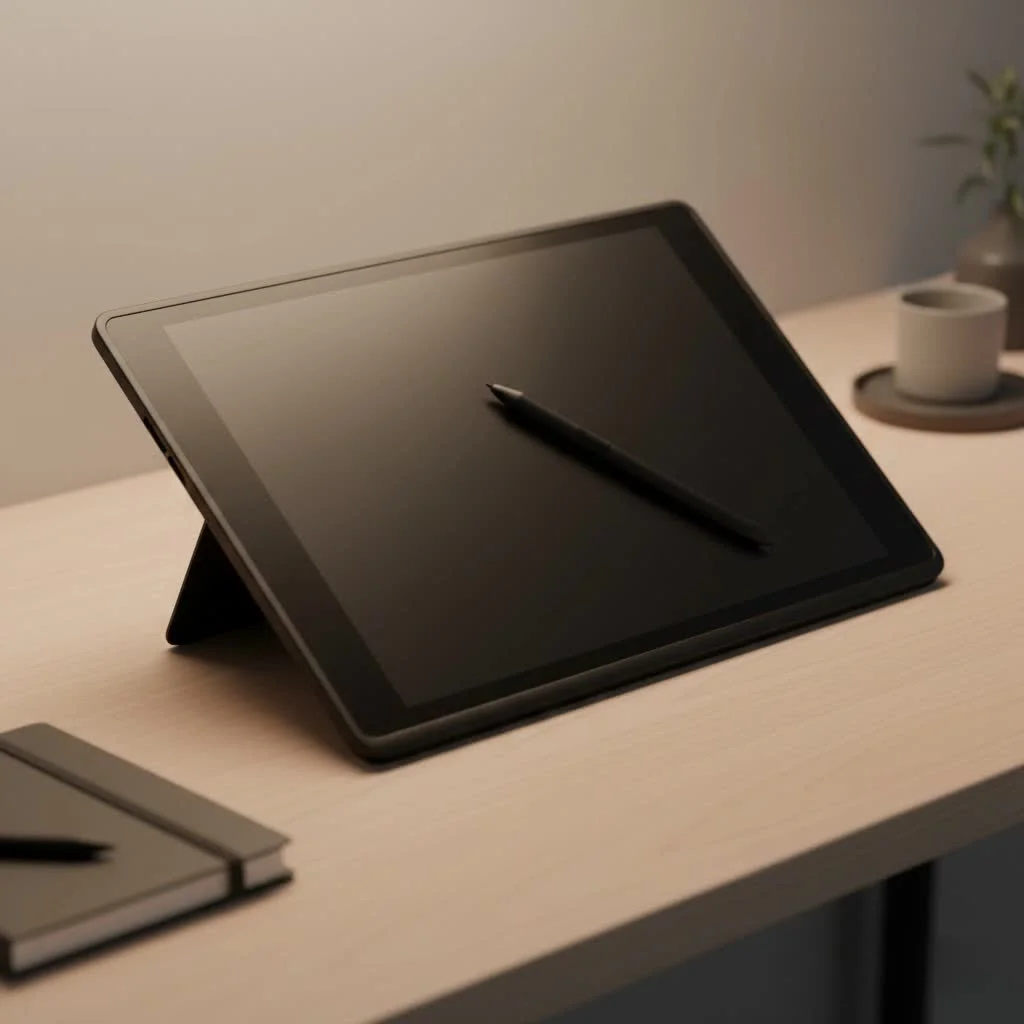
Whether you’re a complete beginner sketching your first character or a seasoned professional working on a complex illustration, understanding the nuances of a drawing tablet is key. It’s not just about connecting a device to your computer; it’s about finding an extension of your own hand.
What is a Graphic Tablet and Why Do You Need One?
A graphic tablet, also known as a drawing tablet or pen tablet, is an input device that allows you to draw on a computer with a stylus, mimicking the natural feel of a pen on paper. Unlike a mouse, which offers limited, clunky control, a graphic tablet provides the precision, pressure sensitivity, and intuitive motion needed for high-quality digital art. Using a mouse for drawing is like trying to paint with a brick—you can do it, but the result is rarely what you envisioned. A graphic tablet unlocks fluidity, control, and a level of detail that is simply impossible to achieve otherwise.
For anyone serious about digital painting, illustration, photo editing, or 3D sculpting, it is an indispensable tool. It translates the subtle pressure and tilt of your hand into digital brushstrokes, giving your work an organic, human touch.
Key Features to Consider When Choosing a Tablet
Navigating the technical specifications can be daunting. Let’s break down the most important features to look for in a graphic tablet for digital art so you can make an informed decision.
Active Area: Your Digital Canvas Size
The active area is the surface on the tablet that detects your pen input. It’s your actual drawing space. A common misconception is that bigger is always better. The ideal size depends on your workflow and monitor size.
- Small Tablets (around 6×4 inches): These are portable and affordable, making them great for beginners or artists with limited desk space. They are best paired with smaller laptop screens.
- Medium Tablets (around 10×6 inches): This is the sweet spot for most users. They offer a comfortable drawing area without being too cumbersome and pair well with most standard monitors (21-27 inches).
- Large Tablets (12×8 inches and up): Preferred by professionals who make large, sweeping strokes and work on high-resolution monitors. They require more arm movement, which can be more ergonomic for some.
Pressure Sensitivity: The Soul of Digital Drawing
|
Our Picks for the Best Graphic Tablet in 2026
As an Amazon Associate I earn from qualifying purchases.
|
||
| Num | Product | Action |
|---|---|---|
| 1 | Drawing Tablet for Beginner Graphics OSU Tablet with Battery-Free Stylus 8192 Pressure Sensitive for Digital Art, Painting & Design, Compatible with Windows, Mac OS and Android |

|
| 2 | HUION Kamvas 13 (Gen 3) Drawing Tablet with Screen,13.3\" Full-Laminated Art Tablet with Anti-Sparkle Canvas Glass 2.0, 99% sRGB, PenTech 4.0, 16384 Pen Pressure, Dual Dial for PC, Mac, Android, Black |
|
| 3 | HUION Drawing Tablet HS610 Graphic Tablet with Battery-Free Stylus 8192 Pen Pressure Tilt Function, 10x6.25 Inches Digital Art for Animation & Design, Compatible with Windows/Mac/Android |
|
| 4 | HUION KAMVAS Pro 16 Drawing Tablet with Screen, 15.6 inch Pen Display Anti-Glare Glass 6 Shortcut Keys Adjustable Stand, Graphics Tablet for Drawing, Writing, Design, Work with Windows, Mac and Linux |
|
| 5 | HUION Inspiroy H640P Drawing Tablet, 6x4 inch Digital Art with Battery-Free Stylus, 8192 Pen Pressure, 6 Hot Keys, Graphics Tablet for Drawing, Writing, Design, Teaching, Work with Mac, PC & Mobile |
|
| 6 | GAOMON M10K Drawing Tablet, 10x6 inch Large Graphics Tablet with Touch Ring, 8192 Levels Battery-Free Stylus, 10 Hot Keys, Art Tablet for Design, Writing, Editing, Work with Mac, Windows, Android |
|
| 7 | Wacom Intuos Pro Medium Bluetooth Professional Graphic Drawing Tablet with Pro Pen 3, Compatible with Mac, Windows - 2025 Edition |
|
| 8 | XOPPOX Graphics Drawing Tablet 10 x 6 Inch Large Active Area with 8192 Levels Battery-Free Pen and 12 Hot Keys, Compatible with PC/Mac/Android OS for Painting, Design & Online Teaching Black |
|
| 9 | HUION Inspiroy H1060P Graphics Drawing Tablet with 8192 Pressure Sensitivity Battery-Free Stylus and 12 Customized Hot Keys, 10 x 6.25 inches Digital Art Tablet for Mac, Windows PC and Android |
|
| 10 | Graphics Drawing Tablet, UGEE M708 10 x 6 inch Large Drawing Tablet with 8 Hot Keys, Passive Stylus of 16384 Levels Pressure, UGEE M708 Graphics Tablet for Paint, Design, Art Creation Sketch |
|
Pressure sensitivity determines how the tablet interprets the force you apply with the pen. It’s measured in levels. The higher the number, the more control you have over line weight and opacity.
- 2,048 Levels: Once the standard, this is still perfectly adequate for many hobbyists and beginners.
- 4,096 Levels: A common level in many mid-range tablets, offering a noticeable improvement in control.
- 8,192 Levels: This is the current industry standard for most reputable tablets. It provides an incredibly nuanced and responsive drawing experience, capturing the faintest of strokes with remarkable accuracy.
“Think of pressure sensitivity as the dynamic range of your digital pencil,” explains digital artist and educator, Amelia Grant. “With 8,192 levels, you can go from a whisper-thin hairline to a bold, expressive stroke with a single, fluid motion. It’s what makes digital art feel truly natural.”
Resolution (LPI): The Detail in Your Lines
Resolution, measured in Lines Per Inch (LPI), refers to how many digital lines can fit into one inch of the tablet’s active area. A higher LPI means the tablet can recognize and render finer details, resulting in smoother, more precise lines. Most modern tablets offer an LPI of 5080, which is more than enough for even the most detailed professional work. You’ll find this spec is fairly standard across all but the cheapest entry-level models.
Pen Type: Battery-Free is the Way to Go
The stylus is just as important as the tablet itself. There are two main types:
- Battery-Powered Pens: These require either a disposable or rechargeable battery. They tend to be slightly thicker and heavier, and the last thing you want is your pen dying mid-session.
- Battery-Free Pens (EMR): These use Electromagnetic Resonance technology, drawing power directly from the tablet. They are lightweight, maintenance-free, and the current industry standard. Always opt for a battery-free pen if you can.
Display vs. Non-Display Tablets
This is one of the biggest decisions you’ll make.
- Non-Display Tablets (Pen Tablets): With these, you draw on the tablet’s surface while looking up at your computer monitor. There’s a learning curve to mastering the hand-eye coordination, but they are significantly more affordable and highly durable. They are the classic graphic tablet for digital art.
- Display Tablets (Pen Displays): These have a built-in screen, allowing you to draw directly on the surface where your image appears. This is incredibly intuitive and closely mimics traditional drawing. However, they are much more expensive, bulkier, and can suffer from issues like parallax (a slight gap between the pen tip and the cursor).
Which Graphic Tablet Is Right for You?
Choosing the right device depends heavily on your skill level and budget. Here’s a general breakdown to guide you.
For Beginners: Affordable and Reliable
If you’re just starting, you don’t need to break the bank. Brands like Huion and XP-Pen offer fantastic entry-level tablets that provide professional-grade specs for a fraction of the cost of premium brands.
- Look for: A medium-sized tablet (around 10×6 inches), 8,192 levels of pressure sensitivity, and a battery-free pen.
- Example Models: Huion Inspiroy H1060P, XP-Pen Deco 01 V2.
For Intermediates: The Best of Both Worlds
If you’ve been drawing for a while and are ready to upgrade, you might consider a larger non-display tablet or an entry-level pen display.
- Look for: Enhanced features like tilt support, express keys, and better build quality.
- Example Models: Wacom Intuos Pro (Medium), Huion Kamvas 13, XP-Pen Artist 12.
For Professionals: The Ultimate Creative Tools
For professional artists, investing in a high-end tool is a business expense. This is where large pen displays with high-resolution screens, excellent color accuracy, and minimal parallax shine.
- Look for: A 4K display, laminated screen (to reduce parallax), 99% Adobe RGB color gamut, and robust build quality.
- Example Models: Wacom Cintiq Pro 24, Huion Kamvas Pro 16 (2.5K), iPad Pro with Apple Pencil.
Frequently Asked Questions (FAQ)
What is the best brand for a graphic tablet?Wacom has long been the industry leader, known for its premium build quality and reliability. However, brands like Huion and XP-Pen have become incredibly competitive, offering professional-level features at much more accessible price points. The “best” brand often comes down to your budget and specific needs.
Can I use an iPad as a graphic tablet for digital art?Absolutely. The iPad Pro with the Apple Pencil 2 is a powerful and popular choice, especially with apps like Procreate. It offers a fantastic drawing experience, but it’s a closed ecosystem and can be more expensive than a dedicated pen display that connects to your PC or Mac.
How long does it take to get used to a non-display tablet?The learning curve varies, but most people start to feel comfortable after a few days of consistent practice. It typically takes a week or two to build the muscle memory for seamless hand-eye coordination. Start with simple exercises like drawing shapes and lines to speed up the process.
Do I need a tablet with shortcut keys?Shortcut keys, or ExpressKeys, are customizable buttons on the tablet that you can program to perform common functions like undo, zoom, or changing brush size. They are not essential, but they can significantly speed up your workflow by keeping your hand off the keyboard.
Is tilt support an important feature?Tilt support allows the tablet to recognize the angle of your pen. In compatible software, this can be used to create broader or more tapered strokes, similar to using the edge of a pencil lead. It’s a great feature for digital painters and calligraphers but may not be critical for all art styles.
Your Next Step in Digital Creation
Choosing the right graphic tablet for digital art is a foundational step in your creative path. Don’t get too bogged down by having the “best” gear right away. The most important thing is to get a reliable tool that fits your budget and start creating. Focus on the core features: a comfortable active area, high pressure sensitivity, and a battery-free pen.
Whether you choose an affordable pen tablet or a premium pen display, the device is ultimately a conduit for your skill and imagination. Practice, experiment, and let your new tool become an extension of your artistic vision. The digital canvas awaits.
Frequently Asked Questions
What is the best brand for a graphic tablet?
Wacom is traditionally the industry leader for graphic tablets, known for its premium build quality and reliability. However, brands like Huion and XP-Pen have become highly competitive, offering professional-level features at more accessible price points, making them excellent alternatives depending on your budget and specific needs.
Can an iPad be used as a graphic tablet for digital art?
Yes, the iPad Pro with the Apple Pencil 2 is a powerful and popular choice for digital art, especially with apps like Procreate. It offers a fantastic drawing experience, but it operates within a closed ecosystem and can be more expensive than a dedicated pen display that connects to a PC or Mac.
How long does it take to get used to a non-display tablet?
The learning curve for a non-display tablet varies, but most users start to feel comfortable after a few days of consistent practice. It typically takes one to two weeks to build the muscle memory for seamless hand-eye coordination. Starting with simple exercises like drawing shapes and lines can accelerate the process.
Are shortcut keys necessary on a graphic tablet?
Shortcut keys, also known as ExpressKeys, are customizable buttons on the tablet that can be programmed for common functions like undo or zoom. While not essential, they can significantly speed up your workflow by reducing the need to reach for your keyboard, enhancing efficiency during creative tasks.
Is tilt support an important feature for digital artists?
Tilt support allows the tablet to recognize the angle of your pen, which in compatible software can create broader or more tapered strokes, similar to using the edge of a pencil. This feature is particularly beneficial for digital painters and calligraphers, though it may not be critical for all art styles.
Get our weekly buyer guide
Practical specs, not advice. Unsubscribe anytime.
Upgraded to a Wacom Cintiq Pro 24 recently, and wow, the difference is night and day. The display quality and color accuracy are incredible, which is super important for my professional illustration work. It’s a significant investment, but for anyone serious about their art and needing that high-end performance, it’s worth every penny. My only minor gripe is the cable management could be a little cleaner.
The advice about active area size was spot on! I used to struggle with a smaller tablet, always feeling cramped. Switching to one with a larger active area has made such a difference in my workflow and comfort. It really does feel like a natural extension of my hand now, allowing for broader strokes and less repositioning. Huge improvement for my digital painting.
I picked up a tablet with 4096 levels of pressure sensitivity, thinking it would be enough, but I’m finding myself wishing I’d gone for something with 8,192 levels. For detailed work, I can definitely feel the difference and it sometimes makes my strokes less precise than I’d like. It’s okay for general sketching, but for more intricate pieces, I’m already looking to upgrade.
I’ve been using the Huion Inspiroy H1060P for a few months now, and it’s been a game-changer for my digital art. As a beginner, I really appreciate how easy it was to set up and start drawing. The pressure sensitivity is fantastic, making my lines feel so much more natural than with a mouse. Definitely recommend it if you’re just starting out and don’t want to break the bank.